Recycling and Sustainability at Man With Van Church End
 At Man With Van Church End, sustainability is built into the way we plan, load, move, and deliver every job. Our approach to Church End recycling removals is designed to reduce waste, support responsible disposal, and keep useful materials in circulation for as long as possible. We work with homes, flats, offices, and local businesses that want a moving service with a lighter environmental footprint, and we are continuously improving how we handle reusable items, separated materials, and end-of-life goods.
One of our key aims is to reach a recycling percentage target of 90% for suitable waste streams, where materials can be separated and sent for processing rather than being mixed together. This includes paper, cardboard, metals, certain plastics, wood, textiles, and electronic items that can be directed to the correct facilities. By focusing on sorting at source and careful loading, our Man With Van Church End recycling service helps increase recovery rates and reduce unnecessary landfill use.
We also make use of local transfer stations to keep transport efficient and disposal responsible. These facilities act as practical hubs where separated materials can be consolidated before moving onward to reprocessors and recycling plants. In and around the area, this can support different boroughs’ approaches to waste separation, where collections are often divided into general waste, dry mixed recycling, food waste, and garden waste. That local structure helps make Church End waste recycling more effective because items are directed into the right stream from the start.
 Our team is familiar with the importance of following borough-specific rules on waste separation, especially where collection systems may vary between neighbouring districts. Some areas prioritise mixed dry recycling, while others ask residents to keep glass, paper, and plastics in separate containers. When we manage a move or clearance, we take care to identify which items can be reused, which can be recycled, and which require specialist handling. This attention to detail makes our Man With Van recycling in Church End a smarter and cleaner option for customers who want to reduce environmental impact.
Another major part of our sustainability work is partnership with charities and reuse organisations. Rather than sending suitable items directly for disposal, we aim to direct furniture, household goods, books, clothing, and working appliances toward donation routes whenever possible. These partnerships help extend the life of usable goods and support community causes at the same time. In practice, this means a wardrobe, table, or boxed kitchenware set could find a second home instead of becoming waste, which is a central principle behind our recycling and reuse removals in Church End.
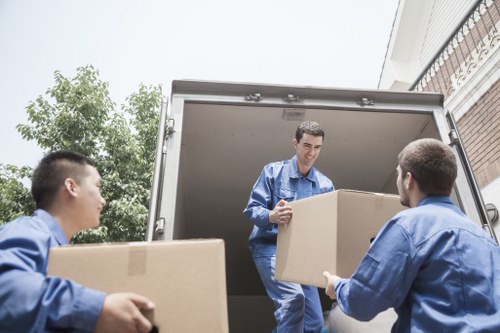 Our charity partnerships are especially valuable during clearances where a property contains a mixture of reusable items and recycling-only materials. We separate what can be donated, what can be dismantled for material recovery, and what must be transported to the correct disposal point. This process reduces the volume sent to landfill and gives customers a more responsible way to clear space. It also means our Church End sustainable van service supports both environmental goals and local social value.
Low-carbon vans are another important part of our sustainability plan. We use vehicles selected for fuel efficiency, lower emissions, and practical load capacity so we can complete more work with fewer journeys. Better route planning also helps reduce unnecessary mileage, especially on multi-stop jobs or local collection runs. By combining efficient driving practices with well-packed loads, our Church End eco-friendly van removals can cut emissions without compromising reliability or service quality.
In addition to lower-emission vehicles, we focus on reducing waste from packaging and consumables. Where possible, we encourage reusable crates, blankets, and protective materials instead of single-use alternatives. Cardboard, wrapping, and other packaging from moves are separated so they can enter the correct recycling stream rather than being thrown away with mixed rubbish. This detail matters in a busy area where local waste systems rely on residents and businesses placing items in the right bins for collection.
We also support responsible handling of items that need special treatment, such as small electricals, scrap metal, and old office equipment. These materials often contain components that can be recovered or processed safely at authorised facilities. By directing them into the proper channels, our Man With Van Church End recycling removals reduce the chance of contamination and help improve overall recycling performance across the neighbourhood.
 A sustainable move is not only about disposal; it is also about making better decisions before, during, and after transport. We encourage reuse wherever possible, separate recyclable materials carefully, and use local transfer stations to keep the process efficient. In areas where boroughs take different approaches to waste separation, this flexibility is especially useful because it allows us to follow the correct handling method for each item and each location. That means customers receive a service that is both practical and environmentally conscious.
As part of our commitment, we continue to review how our operations can become even more sustainable, from route efficiency to sorting methods and vehicle selection. Our goal is to make Church End recycling support a natural part of everyday moving and clearance work, rather than an afterthought. By combining charity partnerships, local transfer station use, and low-carbon vans, we offer a service that supports cleaner disposal and better resource recovery.
 For households and businesses looking for a responsible way to move, clear, or downsize, Man With Van Church End provides a practical solution grounded in sustainability. From the first load to the final drop-off, we aim to keep useful items in use, direct recyclable materials correctly, and minimise the carbon cost of transport. It is a simple approach with a meaningful impact: less waste, more reuse, and a greener outcome for the local community.