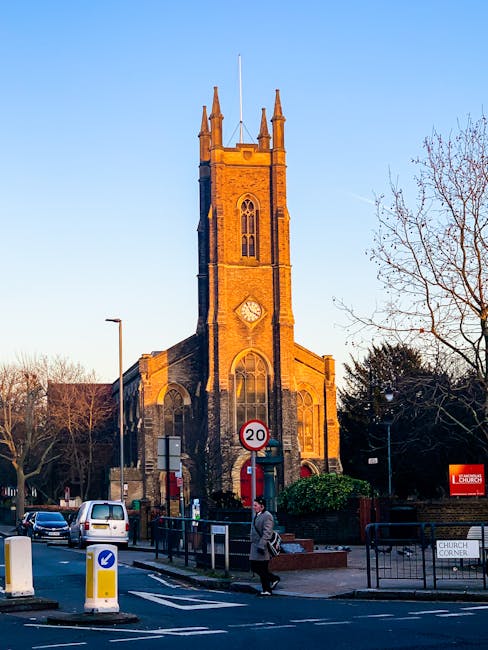
Barnet Council Permits for Church End Removals Explained
If you're planning a move in Church End, parking is often the bit that catches people out. The boxes are packed, the sofa is wrapped, the van is booked, and then someone realises the vehicle can't just stop anywhere outside a terraced street or on a tight High Road bay. That's where Barnet Council Permits for Church End Removals Explained becomes genuinely useful. It's not just admin for the sake of admin; it's about keeping your move legal, smooth, and far less stressful.
In this guide, we'll walk through what removal permits are, when they matter, how they usually work in practice, and how to avoid the awkward last-minute scramble that nobody enjoys. We'll also look at common mistakes, practical planning tips, and the real-world situations where a permit can save you time, money, and a headache or two. Truth be told, a little preparation goes a long way on moving day.
Table of Contents
- Why Barnet Council Permits for Church End Removals Explained Matters
- How Barnet Council Permits for Church End Removals Explained Works
- Key Benefits and Practical Advantages
- Who This Is For and When It Makes Sense
- Step-by-Step Guidance
- Expert Tips for Better Results
- Common Mistakes to Avoid
- Tools, Resources and Recommendations
- Law, Compliance, Standards, or Best Practice
- Options, Methods, or Comparison Table
- Case Study or Real-World Example
- Practical Checklist
- Conclusion
- Frequently Asked Questions
Why Barnet Council Permits for Church End Removals Explained Matters
Most removal problems in urban areas start with one simple issue: space. In Church End, a moving van may need to stop where residents already rely on bays, permits, or loading space. If the van is parked badly, it can block traffic, draw complaints, or even lead to a penalty. That's why permits matter. They help you plan access properly rather than hoping for the best and crossing your fingers at 7:30 in the morning.
For many moves, the permit question is really a timing and logistics question. Will the vehicle need to wait outside the property? Is the road narrow? Is there controlled parking? Can the van use a loading bay without upsetting local restrictions? These are the small details that turn into big delays if nobody thinks about them early enough.
It also matters because moving day is already noisy, tiring, and a bit chaotic. You've got door frames to protect, fragile items to manage, and a clock that always seems faster than expected. If parking is sorted, the rest tends to breathe easier. If it isn't, even the best-planned move can feel like a muddle.
For homeowners, tenants, students, and office teams alike, permit awareness is part of responsible moving. It pairs neatly with good planning, sensible packing, and a clear route. If you're already working through a moving checklist for Church End homes, permit planning belongs near the top, not tacked on at the end.
How Barnet Council Permits for Church End Removals Explained Works
In plain English, a parking or dispensation-style permit lets a removal vehicle stop in a restricted or controlled area for a moving-related reason, subject to the rules that apply locally. The exact arrangement depends on the street, the type of restriction, the size of the vehicle, and the length of time required. There isn't one universal answer for every Church End road, and that's exactly why checking ahead is so important.
Typically, the process starts with identifying the property location and the vehicle needs. A removal van may need a loading bay, a suspended bay, or a temporary solution that allows access close to the door. In some cases, you may need to plan around resident bays or time-limited restrictions. In others, the move can be done quickly enough without formal parking changes, but that should be confirmed rather than assumed. Assumption is expensive. Not always in money, but definitely in stress.
It helps to think about the permit as part of the wider move plan. For example, if you're using a man with a van in Church End, the parking setup may influence how many trips are needed, how long loading takes, and whether helpers can work safely from the vehicle to the front door. If you're moving heavier items, such as wardrobes or white goods, that small parking decision becomes even more important.
Some moves can be handled with flexible on-street stopping, while others need more careful coordination. A narrow terrace street, a busy school run, or a location with limited kerbside access can change everything. This is where experienced movers usually earn their keep: they spot the access issue before it becomes a problem.
Key Benefits and Practical Advantages
Getting the permit side right does more than avoid a ticket. It changes the pace and feel of the whole move. You can load more efficiently, reduce carrying distance, and keep the crew focused on the actual removals rather than repeatedly shuffling vehicles around the road.
- Less risk of fines or complaints: A properly planned stop is less likely to cause parking trouble.
- Faster loading and unloading: Shorter walking distances often mean a smoother move.
- Safer handling: Heavy items are easier to move when the van is correctly positioned.
- Better time control: You're less likely to lose half an hour hunting for a legal space.
- Lower stress: That calm feeling matters more than people admit.
There's also a commercial advantage. If a removal company knows the access arrangement in advance, it can bring the right team, the right vehicle size, and the right equipment. That can be especially useful for house removals in Church End, where the scale of the job may vary from a small flat to a full family home.
And let's not forget timing. If you're moving during a busy period or need help at short notice, parking uncertainty can slow everything down. When a van can park correctly first time, the whole job feels tidier. A bit less frantic. A bit more human, really.
Who This Is For and When It Makes Sense
Permit planning is relevant for more people than you might expect. It isn't just for huge houses or complicated office relocations. In Church End, it can matter for very ordinary moves too, especially where street parking is tight.
You're likely to need this conversation if you are:
- moving from a terraced house or maisonette on a narrow road
- living on or near a controlled parking street
- booking a larger removal vehicle that needs direct access
- moving bulky furniture or fragile items that shouldn't be carried far
- arranging a same-day or last-minute relocation
- coordinating an office or business move where timings are tight
Students often overlook permit issues because they think the move is small. But a staircase, a sofa, and a van with nowhere to stop can make even a modest move awkward. That's one reason student removals in Church End still benefit from proper access planning.
If you're moving into a flat, parking can be even more of a puzzle. Lift access, shared entrances, and loading windows all shape the day. In those cases, permit planning is not a luxury. It's part of basic move prep.
Step-by-Step Guidance
If you want the process to feel manageable, break it down. The good news is that most permit-related moving issues can be avoided with a simple sequence. Not glamorous, but effective.
- Check the street setup early. Look at whether the property sits on a restricted road, a resident bay, or a narrow side street.
- Measure the practical access. Think about where the van could reasonably stop and how far items would need to be carried.
- List the vehicle type. A small van and a long-wheelbase van create different access needs.
- Plan the loading window. Estimate how long the crew will actually need, then add a little buffer. Moves rarely finish exactly on the minute.
- Decide whether the permit issue is for parking or loading. Those are not always the same thing, and that distinction matters.
- Coordinate with the removal team. Share the access details when booking so they can advise on the best approach.
- Confirm the day-before plan. A quick check reduces last-minute surprises.
A useful habit is to combine parking planning with packing and route planning. If you're also reading about packing effectively for a stress-free move, you'll notice the same principle: the earlier you reduce uncertainty, the easier moving day becomes.
For a realistic example, imagine a two-bedroom flat move from a road with limited daytime parking. The van arrives, but the nearest legal space is 60 metres away. Suddenly the whole job becomes slower and more tiring. If the parking arrangement had been sorted ahead of time, the mover could have loaded directly from the front door. Small difference, big impact.
Expert Tips for Better Results
Here are the details seasoned movers pay attention to. These are the things that tend to separate a smooth move from a slightly scrambled one.
- Think in walking distance, not just parking space. A legal bay is only helpful if it's close enough to be practical.
- Keep entry paths clear. Hallways, pavements, and front steps all matter on the day.
- Separate heavy from delicate items. This speeds loading and reduces damage risk.
- Use a realistic time estimate. People often underestimate how long dismantling and wrapping takes.
- Have a backup plan. If the closest bay is taken, know the next-best option before the van arrives.
There's also a practical safety angle. Proper positioning matters because removal work isn't just about efficiency; it's about avoiding strain and injury. If you're curious about the mechanics behind safer handling, the piece on kinetic lifting and physical movement is a good reminder that technique really does matter.
And for the heavier awkward stuff? Be honest about what can be handled safely. A piano, for example, is a different conversation entirely. If that sounds like your day, take a look at the real risks of solo piano relocations. Sometimes the smartest move is simply not to do it solo. Quite sensible, really.
Common Mistakes to Avoid
A lot of permit problems are self-inflicted. The good news? They're also avoidable.
- Leaving permit checks too late. This is the big one. The day before is not ideal.
- Assuming a loading stop is always allowed. Some roads are more restrictive than they look.
- Booking a vehicle before checking access. If the van is too large for the road, the day gets messy fast.
- Forgetting about timing restrictions. A space may be available, but not at the time you need it.
- Not telling the removal team about access limits. If they don't know, they can't plan properly.
- Ignoring neighbours and shared entrances. Moves are easier when everyone can get in and out without friction.
One small but common slip: people focus so hard on the van that they forget the furniture. If you're moving awkward items, you'll also want to prepare them properly. For instance, the advice on moving your bed and mattress is the sort of practical guidance that pays off on the day, especially when time is tight and the street is narrow.
Another easy mistake is treating storage as an afterthought. If there's a gap between leaving one home and entering the next, furniture and appliances need a plan too. That's where a local option like storage in Church End can help keep the move organised rather than chaotic.
Tools, Resources and Recommendations
You do not need fancy software or a logistics degree to handle this well. A few straightforward tools and habits are enough.
- A written moving timeline: Keep key dates, access notes, and loading times in one place.
- Measurements of large items: Sofa length, mattress size, wardrobes, and anything awkwardly shaped.
- Photos of the street and parking layout: Useful if you need to explain access to the removal team.
- Boxes, labels, and tape: Good organisation reduces the time the van needs to remain parked.
- Packaging for fragile items: Helps protect glassware and electronics during quick loading.
If you're building your move kit, the advice on packing and boxes in Church End is a sensible companion read. It keeps the practical side front and centre, which is exactly where it should be.
For people who prefer a structured plan, a checklist is often the best resource of all. It stops the little tasks disappearing into the noise of moving day. That's why many people find a local guide like the last-minute Church End moves checklist unexpectedly helpful, even when they're not actually last minute.
Law, Compliance, Standards, or Best Practice
Parking and moving compliance is one of those subjects where the safest approach is careful, local, and current. Rules can vary by street, by bay type, by time of day, and by the nature of the vehicle. So while the broad principle is simple - don't park or stop in a way that breaches local restrictions - the exact arrangement needs checking for the specific location.
Best practice is to treat parking access as part of the move planning, not as a separate issue. That means confirming whether the vehicle can stop legally, whether any waiting or loading allowance applies, and whether the move might affect residents, pedestrians, or traffic. If a road is controlled, that should be respected rather than worked around with optimism. Optimism is lovely; tickets are not.
From a removals perspective, good compliance also supports safety. If the van is positioned poorly, the carrying route may become longer, more exposed, or more tiring. That increases the chance of strain, drops, and rushed handling. A calm, controlled setup is better for everyone involved.
This is also where decent operators stand out. Transparent planning, sensible communication, and clear pricing terms matter. If you're comparing options, it can help to review pricing and quotes alongside access arrangements so there are no awkward assumptions later. And if you want a broader picture of the company's working standards, the pages on health and safety and insurance and safety are worth understanding too.
Options, Methods, or Comparison Table
There's more than one way to handle moving-day parking in Church End. The best option depends on the road, the property, and how much you're moving.
| Approach | Best for | Pros | Watch out for |
|---|---|---|---|
| Standard on-street parking | Quiet streets with flexible parking | Simple, quick, often no extra admin | May not be legal or close enough |
| Loading or unloading arrangement | Short, well-timed moves | Good for fast access and reduced carrying | Timing and local restrictions still matter |
| Formal parking permit or dispensation | Controlled roads and tighter access | More certainty, better planning | Needs advance organisation |
| Off-street loading from a driveway or forecourt | Homes with private access | Usually the easiest and safest | May still need careful positioning |
In practice, many Church End moves use a mix of these methods. For example, the van might briefly stop in a loading area, then shift to a legal space while the team completes the carry. That sort of flexibility can be a real lifesaver.
If the move is urgent, a service such as same day removals in Church End may be the right fit, but even then, access planning still matters. Urgency doesn't cancel parking rules. Annoyingly, no.
Case Study or Real-World Example
Picture a couple moving out of a first-floor flat near Church End. They've got a bed frame, a chest of drawers, several boxes of kitchen items, and a sofa that's far bigger than it looked in the living room. The road outside is busy, with resident parking and limited daytime availability. If the van just turns up and hopes for a gap, the team may end up parking far away, carrying everything uphill and across uneven paving. Not ideal.
Instead, they check access in advance, flag the tight street, and plan the loading window around the quietest part of the morning. The van is positioned as close as possible, the larger items come out first, and the carry distance is kept short. The move still takes effort - of course it does - but it feels controlled rather than frantic.
The same logic applies to office moves. Desks, chairs, printers, and archive boxes are all easier to manage when the vehicle is close. For business clients, that's one reason office removals in Church End benefit so much from advance access planning. Less downtime. Less interruption. More breathing room.
And if the move involves awkward oversized furniture, you may want support beyond a van and a pair of willing arms. The right approach to furniture removals in Church End can make the difference between a straightforward job and a morning that drags on until lunchtime.
Practical Checklist
Use this as a quick pre-move sanity check. It won't do the lifting for you, sadly, but it will keep the day tidier.
- Confirm the property address and exact access point
- Check whether the road has parking controls or loading restrictions
- Measure any large furniture or appliances
- Share parking and access notes with the removal team
- Decide whether a permit, loading arrangement, or off-street stop is best
- Prepare boxes so loading can happen quickly
- Keep hallways, entrances, and pavement space clear
- Plan a backup parking option in case the first choice is taken
- Protect floors, walls, and door frames where needed
- Double-check timing the day before the move
If you're still in the early stage of planning, the article on decluttering before your move is a smart companion piece. Less clutter means quicker loading, and quicker loading means less time worrying about where the van can stop. Simple enough, but easy to overlook.
Practical summary: the best permit strategy is the one that matches your road, your vehicle, and your moving window. Plan early, keep your removal team informed, and treat parking as part of the move, not an afterthought. That alone avoids a surprising amount of pain.
Get a free quote today and see how much you can save.
Conclusion
Church End moves can be perfectly manageable when the access side is handled with care. Barnet Council permits, loading rules, and parking restrictions are not there to make life awkward; they're simply part of moving in a busy part of London. Once you understand how they fit into the wider process, the whole thing becomes much less intimidating.
The main lesson is straightforward: check early, plan the van position properly, and keep communication clear. Whether you're moving a studio flat, a family home, or a workspace, the smartest moves are rarely the most rushed ones. They're the ones where someone asked the awkward parking question before the boxes were already stacked by the front door.
Get the practical details right, and the rest tends to follow. A decent move should feel busy, yes, but not chaotic. And that's a relief on any London street, especially first thing in the morning.
Frequently Asked Questions
Do I always need a Barnet Council permit for a removal van in Church End?
Not always. It depends on the street, the parking restrictions, the size of the van, and how long the vehicle needs to stay. Some moves can be done without a permit if access is flexible, but controlled roads often need more careful planning.
How far in advance should I check parking arrangements?
As early as possible. Ideally, parking should be checked while you're booking the move, not after everything has been packed. The earlier you assess access, the easier it is to choose the right vehicle and time slot.
What happens if the van can't park close to my property?
The team may need to park further away and carry items a longer distance, which can add time and effort. In some cases that's manageable. In others, it creates a real delay, especially with heavy furniture or multiple trips.
Are permits different for loading and parking?
Yes, they can be. A loading arrangement may allow short-term stopping for active loading or unloading, while a parking permit or dispensation may cover a different kind of vehicle presence. The details matter, so it's worth clarifying the exact setup.
Can a removal company sort the permit side for me?
Some can advise on the process or help you understand what's needed, but you should always confirm responsibility before the move. Don't assume it's handled unless that has been clearly agreed.
What if I'm moving from a flat with no driveway?
That's exactly when access planning becomes more important. Flats often depend on street parking, shared entrances, and timed loading windows, so permit checks and vehicle positioning should be considered early.
Is it worth booking a bigger van to do fewer trips?
Sometimes yes, sometimes no. A larger van can reduce trips, but only if the street can take it safely and legally. In a tight Church End road, a slightly smaller vehicle may actually work better.
Do same-day moves still need parking planning?
Absolutely. A rushed move still has to obey parking restrictions. Same-day removals can be helpful, but they're smoother when the access details are known in advance or checked immediately.
What should I tell the removal team before moving day?
Give them the full address, any parking restrictions, whether the road is narrow, if there's a lift or stairs, and whether you expect bulky items. Honest detail helps them plan properly. It saves everyone from surprises.
Can parking issues affect the cost of my move?
They can, because access difficulties may increase time, labour, or vehicle complexity. That's why it's sensible to discuss the layout clearly when asking for a quote.
How do I reduce the risk of delays on moving day?
Keep boxes ready, label the essentials, clear the route, and confirm parking access before the van arrives. Small things, but they add up. A move with fewer unknowns is almost always calmer.
Where can I learn more about planning a Church End move properly?
Helpful next steps include reading about moving without the stress, checking the wider services overview, and reviewing practical pages such as man and van Church End or removals in Church End if you're comparing options.